








GEN Law Firm is pleased to announce that partner Steve Zhao was invited to speak at the WTR LIVE: 2026 Brand Strategy Summit Europe, held in London on 4–5 March 2026. Organized by World Trademark Review (WTR), the leading global trademark intelligence platform, the summit convened senior in-house brand counsel, IP practitioners and industry leaders from across the globe under the theme "Protecting Value. Building Resilience. Unlocking Success."
GEN Law Firm is proud to have served as a Gold Sponsor of this event, alongside leading international law firms including Browne Jacobson, CMS, and Finnegan.
The two-day program addressed a broad spectrum of issues at the forefront of brand strategy, including the deployment of artificial intelligence in brand protection, online and offline anti-counterfeiting enforcement, the emerging challenge of "dupe culture," domain name portfolio management, IP valuation in M&A transactions, brand reputation crisis response and IP leadership development. The summit featured masterclasses, lightning talks, fireside chats and expert forums designed to foster candid, cross-border dialogue among practitioners.
Lightning Talk: Enforcement Wins and Losses
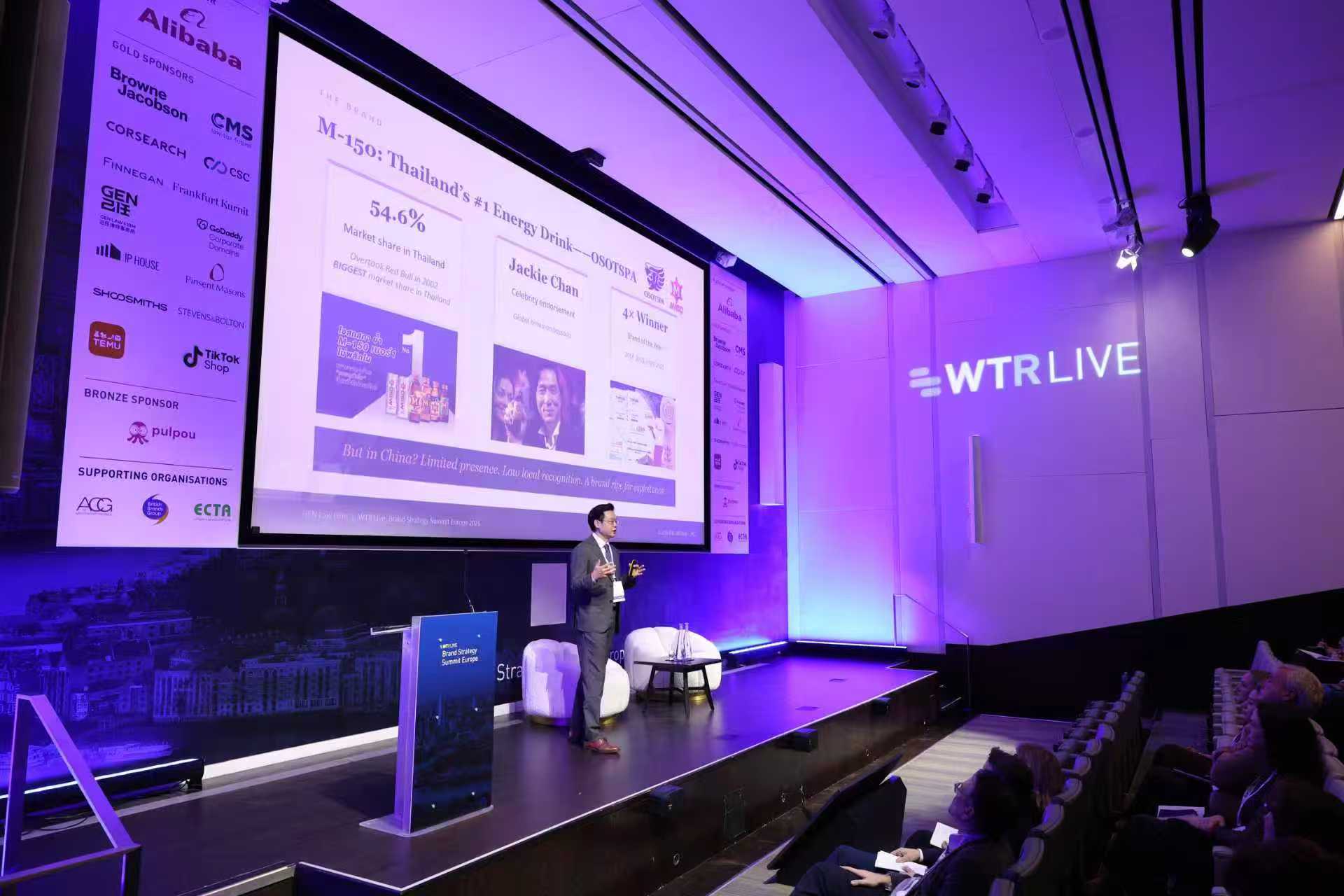
Mr. Zhao delivered a lightning talk during the afternoon session on 4 March, "Enforcement Wins and Losses — Lessons for 2026," which brought together enforcement specialists from multiple jurisdictions for focused presentations on landmark European trademark rulings, AI-related copyright disputes and IP enforcement strategy in China.
Speaking under the title "When All Seems Lost — How Thailand's No. 1 Energy Drink Brand Defeated China's Most Sophisticated Trademark Squatting Ring," Mr. Zhao drew on a landmark matter in which he led the GEN team in representing Thai beverage brand M-150 in a complex, multi-front enforcement campaign in China. His presentation provided attending practitioners with a systematic analysis of emerging trends in Chinese IP enforcement and offered practical, China-grounded insights for global brand protection strategy.
Case Study: The M-150 Enforcement Campaign
Central to Mr. Zhao's presentation was GEN's representation of Osotspa Public Company Limited, the Thai consumer goods group, in protecting its flagship M-150 energy drink brand in China.
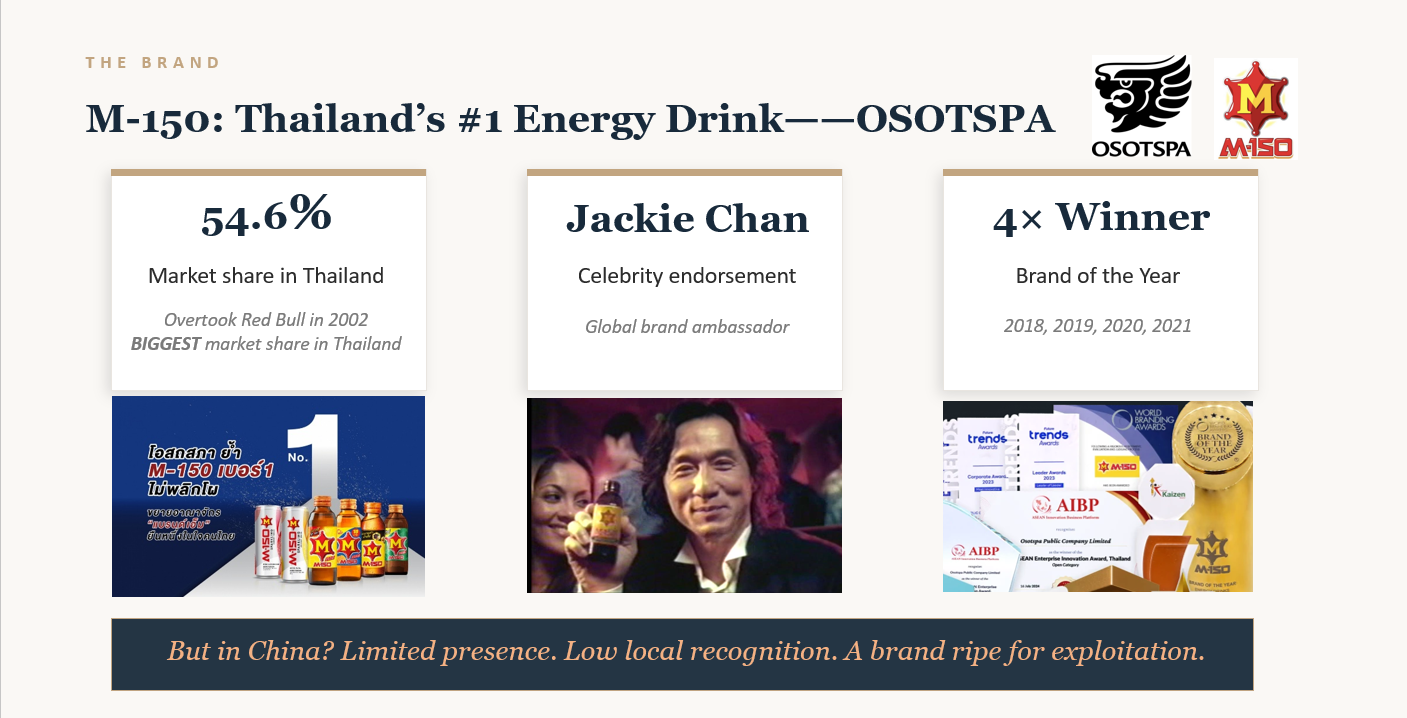
M-150 is Thailand's longest-established and highest-market-share energy drink, with over 40 years of market leadership and distribution across 29 countries. Upon entering the Chinese market, however, the brand encountered a highly organized, family-operated squatting syndicate that had established 41 shell companies to execute a coordinated scheme of systematic trademark squatting, strategic Customs recordals designed to intercept genuine imports, and large-scale manufacturing of counterfeits virtually indistinguishable from authentic products. The result was a near-total blockade of the brand's ability to operate and enforce its rights in China.
With all conventional trademark-law remedies effectively foreclosed, Mr. Zhao and the GEN team devised a three-pronged enforcement strategy:
Recharacterizing the dispute. The team conducted a comprehensive investigation into the syndicate's corporate structure and operations, reframing the matter from an isolated trademark dispute into a systematic enforcement action against a professional infringement network.
Constructing a multi-layered legal arsenal. Moving beyond the trademark law framework, the team built a coordinated set of claims spanning copyright protection, the Anti-Unfair Competition Law and personal liability of the syndicate's ultimate controllers.
Engineering a "domino effect." Securing an initial civil litigation victory, the team leveraged that result to sequentially dismantle the syndicate's Customs recordals, administrative complaints and bad-faith lawsuits, generating a cascade of successive wins.
Mr. Zhao highlighted three groundbreaking legal arguments adopted by the appellate court:
The "reverse inference" doctrine — the syndicate's deliberate and systematic targeting of well-known brands was treated as affirmative evidence of the rights holder's market influence.
The "cross-border goodwill" theory — the court endorsed a holistic assessment of both domestic and international brand reputation in determining protectable goodwill.
Piercing the bad-faith registration defense — the court rejected the registrant's reliance on its own trademark registrations as a shield against infringement liability, where those registrations were obtained in bad faith.
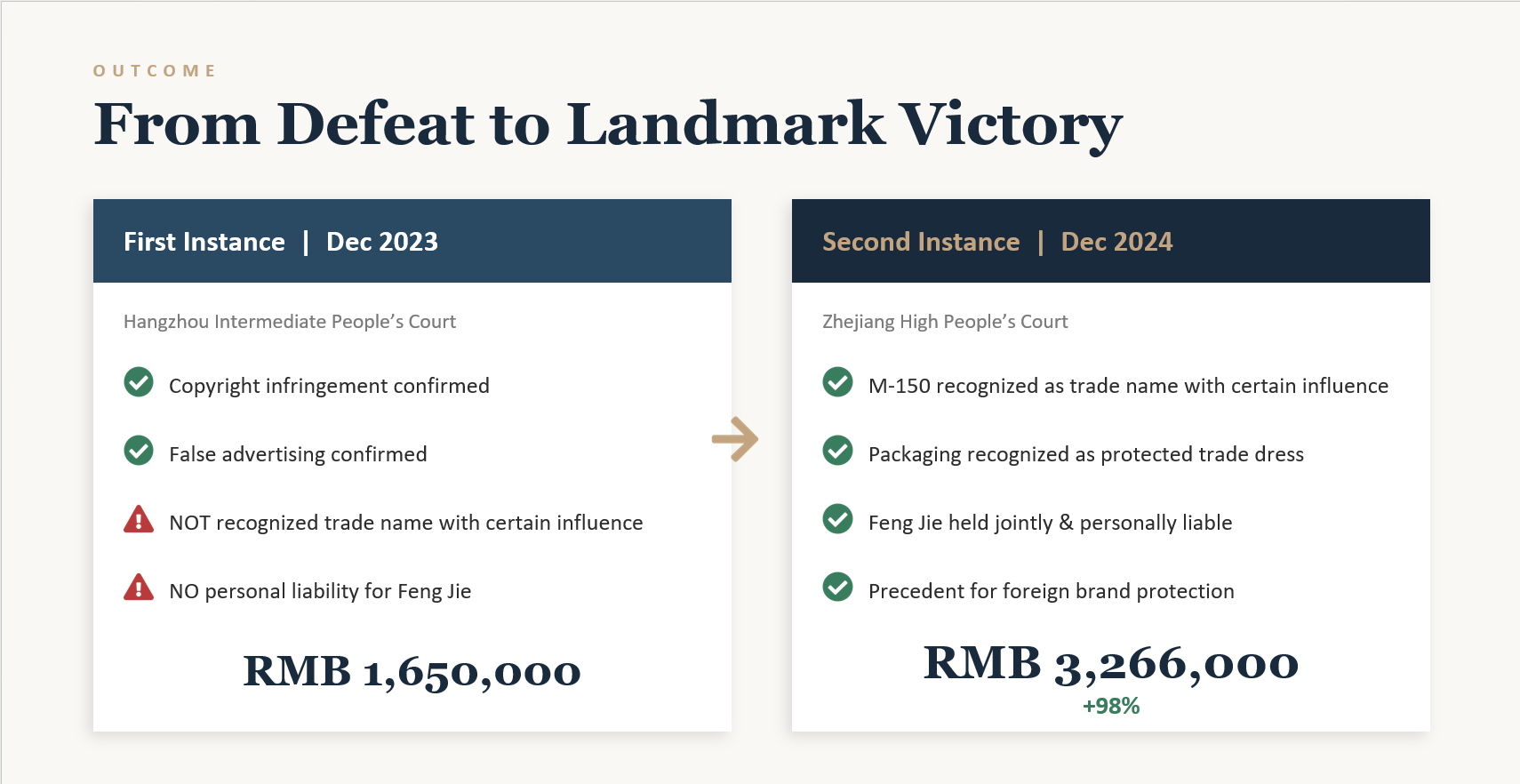
The case resulted in a decisive victory for M-150 and was recognized as one of the Top Ten IP Judicial Protection Cases of Zhejiang Courts in 2024. It was subsequently showcased by the Zhejiang High Court on World IP Day 2025.
Four Key Trends Reshaping IP Enforcement in China
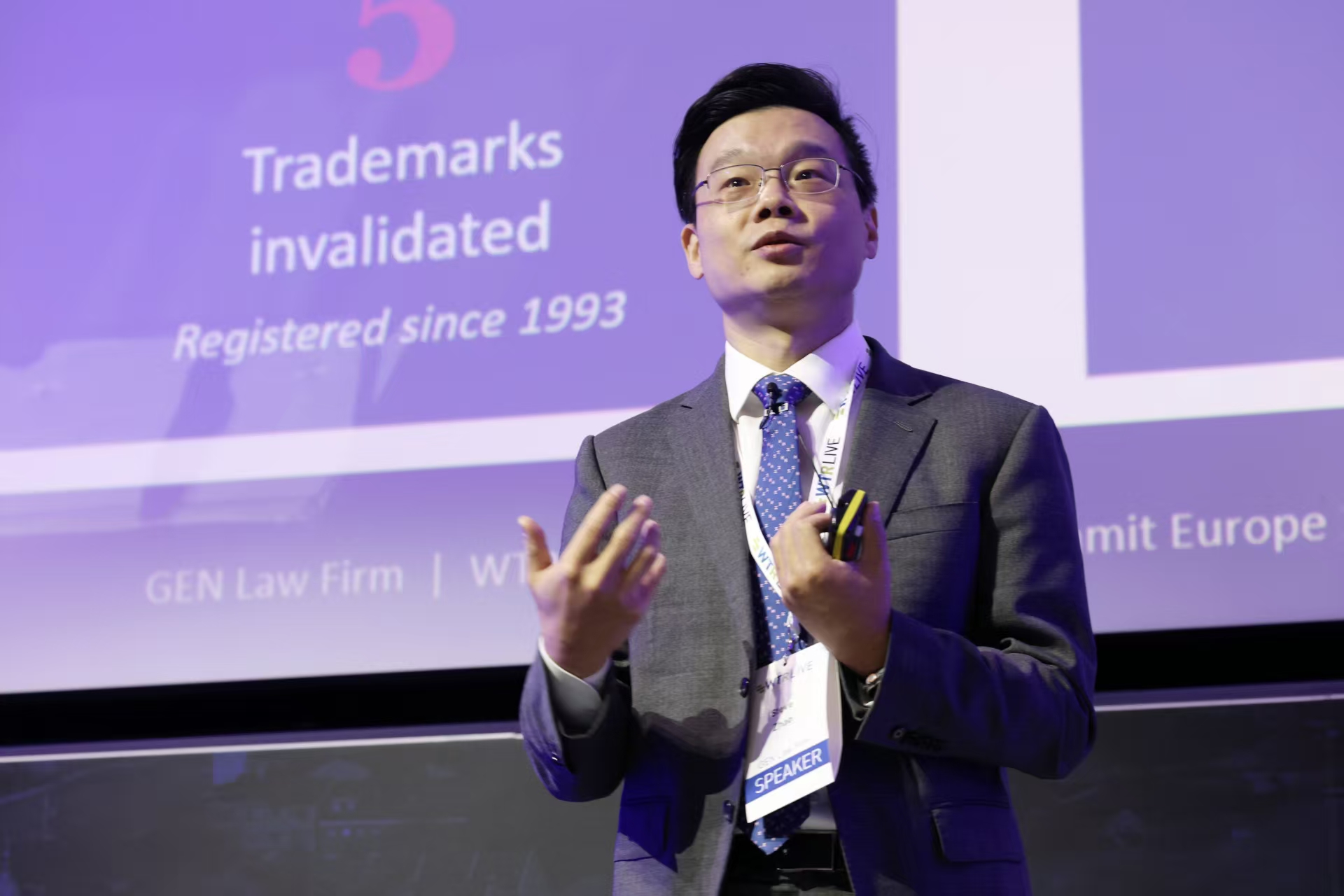
Extending beyond the case study, Mr. Zhao shared with the global audience four key trends that are reshaping the IP enforcement landscape in China:
1. The Anti-Unfair Competition Law as a supplementary safety net. Where conventional trademark remedies reach their limits — particularly under the first-to-file system — the Anti-Unfair Competition Law increasingly provides multinational brand owners with alternative, multi-dimensional avenues of legal protection.
2. Judicial recognition of cross-border goodwill. Chinese courts are attaching growing weight to the goodwill that overseas brands have accumulated in the Chinese market. The evidentiary standards and scope of protection for cross-border reputation continue to expand, strengthening the position of international rights holders.
3. Personal liability as a deterrent. Courts are increasingly willing to impose joint liability on the ultimate controllers of infringement syndicates and the trademark agencies that facilitated bad-faith filings, enabling targeted enforcement that addresses systematic squatting at its source.
4. Strategic judicial signaling. Through the annual selection of landmark cases for inclusion in official IP judicial protection reports, Chinese courts are sending an unmistakable signal of strengthened IP enforcement, reinforcing the guiding and precedential role of judicial decisions.
Mr. Zhao's appearance at the WTR LIVE 2026 Brand Strategy Summit Europe reflects GEN Law Firm's deep bench strength and international perspective in cross-border IP dispute resolution. Mr. Zhao has been invited to speak at multiple WTR events, contributing China-focused enforcement insights to the global IP community.
GEN Law Firm will continue to build on its recognized capabilities in cross-border IP enforcement and brand protection strategy, delivering forward-looking, China-rooted counsel to rights holders worldwide.
Click the link below to access Steve Zhao's presentation slides for your reference: https://drive.google.com/file/d/1lUsEw937YIbhjQIcI49wX71eKySkXah2/view?usp=sharing
